Off the Top: Information Aggregation Entries

20052010201520202025

Showing posts: 46-60 of 140 total posts


17 June 2007

Stitching Conversation Threads Fractured Across Channels

Communicating is simple. Well it is simple at its core of one person talking with another person face-to-face. When we communicate and add technology into the mix (phone, video-chat, text message, etc.) it becomes more difficult. Technology becomes noise in the pure flow of communication.

Now With More Complexity

But, what we have today is even more complex and difficult as we are often holding conversation across many of these technologies. The communication streams (the back and forth communication between two or more people) are now often not contained in on communication channel (channel is the flavor or medium used to communicate, such as AIM, SMS, Twitter, e-mail, mobile phone, etc.).

We are seeing our communications move across channels, which can be good as this is fluid and keeping with our digital presence. More often than not we are seeing our communication streams fracture across channels. This fracturing becomes really apparent when we are trying to reconstruct our communication stream. I am finding this fracturing and attempting to stitch the stream back together becoming more and more common as for those who are moving into and across many applications and devices with their own messaging systems.

The communication streams fracture as we pick-up an idea or need from Twitter, then direct respond in Twitter that moves it to SMS, the SMS text message is responded back to in regular SMS outside of Twitter, a few volleys back and forth in SMS text, then one person leaves a voicemail, it is responded to in an e-mail, there are two responses back and forth in e-mail, an hour later both people are on Skype and chat there, in Skype chat they decide to meet in person.

Why Do We Want to Stitch the Communication Stream Together?

When they meet there is a little confusion over there being no written overview and guide. Both parties are sure they talked about it, but have different understandings of what was agreed upon. Having the communication fractured across channels makes reconstruction of the conversation problematic today. The conversation needs to be stitched back together using time stamps to reconstruct everything [the misunderstanding revolved around recommendations as one person understands that to mean a written document and the other it does not mean that].

Increasingly the reality of our personal and professional lives is this cross channel communication stream. Some want to limit the problem by keeping to just one channel through the process. While this is well intentioned it does not meet reality of today. Increasingly, the informal networking leads to meaningful conversations, but the conversations drifts across channels and mediums. Pushing a natural flow, as it currently stands, does not seem to be the best solution in the long run.

Why Does Conversation Drift Across Channels?

There are a few reasons conversations drift across channels and mediums. One reason is presence as when two people notice proximity on a channel they will use that channel to communicate. When a person is seen as present, by availability or recently posting a message in the service, it can be a prompt to communicate. Many times when the conversation starts in a presence channel it will move to another channel or medium. This shift can be driven by personal preference or putting the conversation in a medium or channel that is more conducive for the conversation style between people involved. Some people have a preferred medium for all their conversations, such as text messaging (SMS), e-mail, voice on phone, video chat, IM, etc.. While other people have a preferred medium for certain types of conversation, like quick and short questions on SMS, long single responses in e-mail, and extended conversations in IM. Some people prefer to keep their short messages in the channel where they begin, such as conversations that start in Facebook may stay there. While other people do not pay attention to message or conversation length and prefer conversations in one channel over others.

Solving the Fractured Communication Across Channels

Since there are more than a few reasons for the fractured communications to occur it is something that needs resolution. One solution is making all conversations open and use public APIs for the tools to pull the conversations together. This may be the quickest means to get to capturing and stitching the conversation thread back together today. While viable there are many conversations in our lives that we do not want public for one reason or many.

Another solution is to try to keep your conversations in channels that we can capture for our own use (optimally this should be easily sharable with the person we had the conversation with, while still remaining private). This may be where we should be heading in the near future. Tools like Twitter have become a bridge between web and SMS, which allows us to capture SMS conversations in an interface that can be easily pointed to and stitched back together with other parts of a conversation. E-mail is relatively easy to thread, if done in a web interface and/or with some tagging to pull pieces in from across different e-mail addresses. Skype chat also allows for SMS interactions and allows for them to be captured, searched, and pulled back together. IM conversations can easily be saved out and often each item is time stamped for easy stitching. VoIP conversations are often easily recorded (we are asking permission first, right?) and can be transcribed by hand accurately or be transcribed relatively accurately via speech-to-text tools. Voice-mail can now be captured and threaded using speech-to-text services or even is pushed as an attachment into e-mail in services as (and similar to) JConnect.

Who Will Make This Effortless?

There are three types of service that are or should be building this stitching together the fractured communications across channels into one threaded stream. I see tools that are already stitching out public (or partially public) lifestreams into one flow as one player in this pre-emergent market (Facebook, Jaiku, etc.). The other public player would be telecoms (or network provider) companies providing this as a service as they currently are providing some of these services, but as their markets get lost to VoIP, e-mail, on-line community messaging, Second Life, etc., they need to provide a service that keeps them viable (regulation is not a viable solution in the long run). Lastly, for those that do not trust or want their conversation streams in others hands the personally controlled application will become a solutions, it seems that Skype could be on its way to providing this.

Is There Demand Yet?

I am regularly fielding questions along these lines from enterprise as they are trying to deal with these issues for employees who have lost or can not put their hands on vital customer conversations or essential bits of information that can make the difference in delivering what their customers expect from them. Many have been using Cisco networking solutions that have some of these capabilities, but still not providing a catch all. I am getting queries from various telecom companies as they see reflections of where they would like to be providing tools in a Come to Me Web or facilitating bits of the Personal InfoCloud. I am getting requests from many professionals that want this type of solution for their lives. I am also getting queries from many who are considering building these tools, or pieces of them.

Some of us need these solutions now. Nearly all of us will need these solutions in the very near future.


13 June 2007

Folksonomy Provides 70 Percent More Terms Than Taxonomy

While at the WWW Conference in Banff for the Tagging and Metadata for Social Information Organization Workshop and was chatting with Jennifer Trant about folksonomies validating and identifying gaps in taxonomy. She pointed out that at least 70% of the tags terms people submitted in Steve Museum were not in the taxonomy after cleaning-up the contributions for misspellings and errant terms. The formal paper indicates (linked to in her blog post on the research more steve ... tagger prototype preliminary analysis) the percentage may even be higher, but 70% is a comfortable and conservative number.

Is 70% New Terms from Folksonomy Tagging Normal?

In my discussion with enterprise organizations and other clients that are looking to evaluate their existing tagging services, have been finding 30 percent to nearly 70 percent of the terms used in tagging are not in their taxonomy. One chat with a firm who had just completed updating their taxonomy (second round) for their intranet found the social bookmarking tool on their intranet turned up nearly 45 percent new or unaccounted for terms. This firm knew they were not capturing all possibilities with their taxonomy update, but did not realize their was that large of a gap. In building their taxonomy they had harvested the search terms and had used tools that analyzed all the content on their intranet and offered the terms up. What they found in the folksonomy were common synonyms that were not used in search nor were in their content. They found vernacular, terms that were not official for their organization (sometimes competitors trademarked brand names), emergent terms, and some misunderstandings of what documents were.

In other informal talks these stories are not uncommon. It is not that the taxonomies are poorly done, but vast resources are needed to capture all the variants in traditional ways. A line needs to be drawn somewhere.

Comfort in Not Finding Information

The difference in the taxonomy or other formal categorization structure and what people actually call things (as expressed in bookmarking the item to make it easy to refind the item) is normally above 30 percent. But, what organization is comfortable with that level of inefficiency at the low end? What about 70 percent of an organizations information, documents, and media not being easily found by how people think of it?

I have yet to find any organization, be it enterprise or non-profit that is comfortable with that type of inefficiency on their intranet or internet. The good part is the cost is relatively low for capturing what people actually call things by using a social bookmarking tool or other folksonomy related tool. The analysis and making use of what is found in a folksonomy is the same cost of as building a taxonomy, but a large part of the resource intensive work is done in the folksonomy through data capture. The skills needed to build understanding from a folksonomy will lean a little more on the analytical and quantitative skills side than the traditional taxonomy development. This is due to the volume of information supplied can be orders of magnitude higher than the volume of research using traditional methods.


22 May 2007

Getting to the Ultimate City Guide

This past week I was in Mexico City for work. My approach to the trip was filled with apprehension as I had never been there and much of the word of mouth and news of Mexico City was on the side of "express kidnappings and other non-cheery events. I pinged my Twitter friends and a couple people responded that they had been to Mexico City in the past year and offered great insights and advice (mostly not to hail taxis on the street and the usual advice for large cities (stay in busy areas, etc.)).

I did not have a lot of time to explore, but I really did enjoy my trip there. But, I was really not well prepared for the trip (mostly because it was rather last minute in a rather busy stretch of other non-related work).

The second day of my trip I felt far more comfortable as I had walked around my busy neighbohood getting a feel for it as I searched for food (there were many options, but I wanted local food not Korean or Argentinian). Walking around there were many offers for taxi rides, table dances, and flat-out prostitution offers. I had a fairly good shield of ignoring the individuals, but some were quite persistent. I found the early morning helped ground me a little better and found the buildings and architecture similar in a way to Bastia, Corsica. This tiny bit of grounding helped connect me to some understanding and provided a connection.

Most travel guide work better for me after I have been some place and preparing me for things I want to discover the next trip, than for preparing me for the first trip.

Trip Preparation and Pre-mapping

The trip was not the only trip I was not well prepared for, my trip to Berlin in Fall 2005 was much the same. But, with the Berlin trip I read and had many travel guide and nothing was really sticking (it too was in a busy travel and work schedule).

The travel guides really do not work well for me as I have nothing for the information to stick to. I have no reference point of familiarity for the information to adhere. Once I gain a foothold of perspective and foundation the information about a place starts making sense. All it takes is a drop of knowledge and the ripples of understanding and familiarity start taking hold.

What I really seem to need is that core grounding point. I have tried Google Earth and other satellite enhanced mapping systems (I am increasingly a fan of Microsofts Live Maps for this as its 3D models are quite helpful), but they still need some level of reference for the info to stick. Information combined with some 3D and 360 views of areas would help. Once I have a point I can hold onto I can then easily expand the knowledge.

The small bit of understanding makes unrolling surrounding areas and deeper understanding easier. For me the thin connection to Corsica helped put the architecture in context. This bit of context is like a Google Map showing an area then pre-loading other near and related information to unpack and apply quickly.

Personally, I like to have cultural understandings of things that are fixed and malleable. Fixed are things like phone systems (GSM) and ease of getting wifi or solid internet access, along with usual cost. Malleable are things that have options like places to eat, things to see and do, etc. Cultural components, like taking many photos in a neighborhood is something I like to understand, do people think a white guy (I was one of a handful I saw in my couple days) taking pictures of buildings and building details is a threat to them? Does this make me a sure target? Is it culturally improper?

Finding Guides that Fit Context

One of my issues is I am often traveling from a business context and need the fixed information. I find the Economist City Guides really good for the basic worklife understanding. I also have cultural (often sub-cultural) interest along the lines of use of technology, food, street art, local information design, social interaction patterns, etc., which seems to come from shared personal experience rather than printed resources.

Ultimate Guide

I think my optimal wish it to have an immersion guide experience prior to traveling, based on the location I will be staying. Then once I am in a location have information rolled out based on context, such as time to eat the food options based on my interest and level of adventure with which I am comfortable. Unrolling understanding and background based on surroundings for where I am and what is around the corner (literally and figuratively) would be fantastic.

This is a familiarity I now have with Amsterdam and parts of London. Some of this familiarity came from having a personal guide take me through those cities nearly 20 years ago. This provided me with an understanding of layout, core elements (transportation systems, cultural understanding, food, etc.), and comfort with a feel for the cities.

Most of the time I am ready for my first trip after going to a city once or have a fellow traveler guide me through their understanding of the city along with a local resident.


20 February 2007

Life Data Streams Bubbling

Emily Chang's post about her My Data Stream brought back memories from a ton of conversations last year. I captured a few of these ideas in a relatively short Life Data Stream post over at Personal InfoCloud, which has comments turned on.

You may want to take a look at TechMeme for related posts.


10 February 2007

Cuban Clocks and Music Long Tail Discovery

The last two trips to San Francisco I have heard a latin version of Coldplay's Clocks on KFOG and it really intrigued me. This last trip I was in the car for four songs and one of them was Coldplay's Clocks by the Cuban All Stars. I have been trying to track this track down since first hearing, but am not having great luck. This continually happens when I listen to KFOG, which is about the only regular radio station I will listen to (I much prefer XM Radio for is lack of advertising and blathering idiots spouting off while playing overplayed songs that have little merit.

What I like about this version of Clocks by the Cuban All Stars (I have seen the dashboard metadata list it as Ibrahim Ferrer, but it has not been described as such by the DJs on KFOG). This is where my music recommendations break. But, some digging on the KFOG website points me to Rhythms Del Mundo as the source (but their Flash site seems horribly broken in all browsers as none of the links work). I have found the album on iTunes, but only a partial listing and none of the physical music store options have this in stock as it is not mainstream enough (how I miss Tower).

This all seems like far more work that should be needed. But, not if one has even slightly long tail musical interests. I had a wonderful discussion along these lines wish Cory from IODA about this and the lack of really good long tail discovery systems.

I use Last.fm to discover new things from friend#039;s lists, but the Last.fm neighbor recommendations seem to only work on more mainstream interests (Pandora really falls off on the long tail for me). Now if KFOG put their play list in KFOG, it would help greatly and I would add them to my friend list (or I could move back home to the San Francisco Bay Area).


2 February 2007

Stikkit Adds an API

Stikkit has finally added an API for Stikkit. This makes me quite happy. Stikkit has great ease of information entry and it is perfect for adding annotations to web-based information.

Stikkit is My In-line Web Triage

I have been using Stikkit, from the bookmarklet, as my in-line web information triage. If I find an event or something I want to come back to latter (other than to read and bookmark) I pop that information into Stikkit. Most often it is to remind me of deadlines, events, company information, etc. I open the Stikkit bookmarklet and add the information. The date information I add is dumped into my Stikkit calendar, names and addresses are put into the Stikkit address book, and I can tag them for context for easier retrival.

Now with the addition of the API Stikkit is now easy to retrieve a vCard, ical, or other standard data format I can drop into my tools I normally aggregate similar information. I do not need to refer back to Stikkit to copy and paste (or worse mis-type) into my work apps.

I can also publish information from my preferred central data stores to Stikkit so I have web access to events, to dos, names and addresses, etc. From Stikkit I can then share the information with only those I want to share that information with.

Stikkit is growing to be a nice piece for microcontent tracking in my Personal InfoCloud.


1 February 2007

Lessons in Identity

There is much consternation and gnashing of teeth today over the Flickr requiring a Yahoo! login from here forward, it has even made it to the BBC - Flickr to require Yahoo usernames. One of the Flickr co-founders, Stewart Butterfield, provided rationale that would have been a little more helpful up front. The reasons from Stewart are good, but are not solid value propositions for many.

Identity Lessons

There are some insanely important lessons in this dust-up. These lessons revolve around product versus mega-brand/mega-corporation; personal management of identity; and brand trust.

Product Brand versus Mega Brand

One of the primary issues in the Flickr and Yahoo! identity merging involves the love of Flickr the brand and what is stands for in contrast to the perception of the Yahoo!. Flickr was a feisty independent product that innovated the snot out of the web and bent the web to its will to create a better experience for real people. Yahoo is seen as a slow mega corporation that, up until recently, could not sort out how to build for the web beyond 1999. Much of the change in Yahoo is credited to the Flickr team and some others like Bradley Horowitz.

The change in Yahoo! has been really slow as it is a really large company. It seems to be moving in a positive direction with the changes to Yahoo! Mail (came from buying another company who got things right) and the new Yahoo! front door, but the perception still hangs on. Similar to Microsoft's operating system and software, changes to the corporation are like trying to turn a battleship under full steam forward. It is tough changing inertia of a corporation, as not only is it internal technologies and mindsets, but brand perceptions and the hundreds of millions of user perceptions and experience that are going to go through the change.

Take the hulking beast of Yahoo and pair that with a new product and brand Flickr, which is seen as incredibly nimble and innovative and there is a severe clash in perceptions.

Personal Management of Identity

There are a couple issues that are tied up together in the Flickr and Yahoo branding problem involving identity. First, there is the issue of being personally associated with the brand. There are many people who strongly consider themself a "Flickr" person and it is an association with that brand that makes up a part of their personal identity. Many of the "Flickr" people believe they are part of the small lively and innovative new web that Flickr represents. The conflating of the Flickr brand with the Yahoo! brand for many of the "Flickr" people is schizophrenic as the brands are polar opposites of each other. Yahoo! is trying to move toward the Flickr brand appeal and ideals, but again it is turning that battle ship.

The tying one's personal identity to Yahoo! is very difficult for many "Flickr" people. Even within Yahoo! there are battles between the old core Yahoo! and the new upstarts that are changing the way things have always worked. Unfortunately, with the flood of start-up opportunities the Yahoo employees who embrace the new way forward are the people who are seemingly moving out to test the revived waters of web start-ups. This makes turning the battleship all that much harder from the inside.

Second, is managing the digital identity and having personal control over it. Many people really want to control what is known about them by one entity or across an identity. I know many people who have more than one Yahoo! account so to keep different parts of their personal life separate. They keep e-mail separate from search and photos out of their own personal understanding of privacy. Privacy and personal control of digital identity is something that has a wide variation. This required mixing of identity really breaks essential boundary for people who prefer (mildly or strongly) to keep various parts of the digital lives segregated. Many people do not want to have one-stop shopping for their identity and they really want to control who knows what about them. This wish and desire MUST be grasped, understood, and respected.

Brand Trust

All of this leads to people's trust in a brand. People have different levels of trust with different brands (even if the brands are treating their information and privacy in the same manner). Flickr greatly benefited by being a small company who many of the early members knew the founders and/or developers and this personal connection and trust grew through a network effect. The staff at Flickr was and is very attentive to the Flickr community. This personal connection builds trust.

Yahoo! on the other hand is a corporation that has not had a personal touch for many years, but is working to bridge that gap and better connect with its communities around its many products (some of this works well, but much is neglected and the bond is not there). The brand trust is thinner for a larger organization, particularly around privacy and control over digital identity. Many of the large companies make it really difficult to only have one view of your identity turned on when you log in (myYahoo, Mail, and movie ratings are on and all other portions are not logged in - for example).

Conversely, there are those who would like to use their Yahoo! identity and login for things like OpenID login. Recently, Simon Willison (a recent ex-Yahoo) did just this with idproxy.net. And, yet others would like to use other external to Yahoo! logins to be used as a single sign on. Part of this is single sign on and another part is personal control over what digital parts of one's live are connected. It is a personal understanding of trust and a strong belief for many that this perception of trust MUST be respected.

One approach that should NEVER happen is what Google is doing with Dodgeball. This past two weeks I have been contacted by a few people using Dodgeball (I use this service), which was bought and is owned by Google. I was getting contacted by people who found my Dodgeball account by entering my Gmail identity. The problem is I never connected my Gmail to Dodgeball and was going to drop Dodgeball over the required joining of the identities. Google in this instance flat out failed at protecting my identity and privacy, but it does that regularly (personally believe that Google is not Evil, but they are not competent with privacy and identity, which is closely tied with Evil). Had Yahoo! done this with Flickr it would have been really over the top. [I have introduced people at Google to the Digital Identity Gang to better understand digital identity and privacy issues, which is a great sign of them knowing they need to do much better.]

Conclusion

There are a lot of tangents to identity, brand, and personal association that seem to have been left out of the equation in the Yahoo! and Flickr identity merger. A more mature approach to identity at Yahoo! would not have required Flickr members to change over, as for many the changes to value added by conflating the identities is not of interest to those who have not done so yet. For many of those that are feeling hurt it is part of their personal identity that is bruised and broken. Hopefully, Yahoo! has grasped this lesson and will treat other acquisions (Upcoming, del.icio.us, and particularly My Blog Log (among others)) differently.


23 November 2006

Adding Another SocialNet to Your List of Too Many?

Phil Gyford makes his plea for a single social network sign-on or as it was stated last week by Jeremy Keith on Twitter, "portable social network with XFN".

This post continues at Following Friends Across Walled Gardens at Personal InfoCloud. This covers identity services, Local InfoCloud, trusted friends, and web services. Comments are turned on there.


9 November 2006

Stikkit Is a Nice Example of a Personal InfoCloud Tool

I have been using the newly launched Stikkit for the last day and rather enjoying it. Stikkit, is a web-based postit with super powers of a notepad with bookmark, calendar, lite address book for people, tagging, to do, and reminders to SMS (in the U.S.) and/or e-mail.

Stikkit is the product of values of n start-up that is the founded by Rael Dornfest, formerly of O'Reilly.

This summer I was in Portland and got a preview of Stikkit and was really impressed. It was a slightly different application at that point, but it had the great bones to be a really nice application for one's own Personal InfoCloud. Much of the really good intuitive scripting that turns dates in text into calendar entries, text to do lists into ones that can be checked-off, and other text to real functionality is in the current version and just sings.

When I used the Stikkit bookmarklet it captured pertinent information from a page that I wanted to track, which had date related information that is essential to something I have interest in, it made a calendar entry. The focus of the Personal InfoCloud is to have applications and devices that let people hold on to information that they have interest in and move it across devices, as well as add their own context. Stikkit, really is a wonderful step in making a rather friction free approach to the Personal InfoCloud. It puts the focus on the person and their wants and needs for the use of the information in a page. Stikkit can free the information from the confines of the web page and alert the person to important dates. Stikkit also allows the person to share what they find easily.

I think the key to Stikkit is the term "easily", which is the underpinning of the whole application. The only thing I would love to see is Microformats added so that the information in Stikkit could be dropped into my own address book or calendar and synced (if the gods of syncing shine favorably on me that day). Looking at the markup in Stikkit, it seems to be semantically well structured to easily add microformats in the near future.

This has been cross-posted at Stikkit at personalinfocloud.com where there is commenting turned on.


1 November 2006

No Personal or Work E-Mail to My Gmail Address

If you want to send an e-mail that gets my attention, please use an address other than my Gmail address. I mostly use that address for listserves. The ability to search, parse, and scan e-mail in Gmail just does not work for me and things I really want to follow-up with only get addressed if I forward them to myself at an other address. [Granted the amount of e-mail I am getting and daily communication is more then I can normally keep-up with at the moment. I deeply apologize if I owe you a response. I need to better embrace the DTD model as my GTOMG model leave too many things left unaddressed.]

Filters, Labels, and Tags

The Gmail interface does not work well for me personally to highlight, track, and respond to the mail. I had a lot of hope for Gmail and its ability to tag (or in Google terms, "label"), but its interface is really poor for doing this with anything more than 10 or 15 labels. When I want to manually applying more than one label the interface is really poor (at best).

GTDGmail

I have looked at the GTDGMail mail as a solution, as its interface is much much better than what Google has churned out. While the GTDGmail is a vast improvement the remainder of Gmail for personal or work mail does not scale to meet my needs on that front. If you are unpleased with the Gmail labelling, as most I know are, you owe it to yourself to look at GTDGmail.


27 October 2006

Yahoo! Bookmarking and Broken Roadmap

[Update: [This response came from Nathan Arnold an engineer on the Bookmarks/Social Search team

It would seem that either we've under-communicated the roadmap ideas, and you've gotten the wrong impression of what's going on.

No MyWeb user is being forced to use Bookmarks or Del.icio.us just yet. Del.icio.us continues to stand on its own, and MyWeb and Bookmarks continue to share your data. If you save something in Bookmarks, it will be private in MyWeb. If you save something in MyWeb, it will show up in Bookmarks and you can edit it their (bookmarks being private, only you can access it).

The eventual roadmap is to migrate users off MyWeb only when the good social elements of MyWeb have been integrated into the bookmarks product. Until that time, users can continue to use MyWeb as they see fit. When we do shut the switch off to MyWeb, the same features will be available on Bookmarks.

At that time, they will ALSO have the option of migrating content to del.icio.us.

Hope that clears it up...]

I have received a lot of response to one item from yesterday's post, Yahoo! Bookmarks Beta (or Alpha), which looked at the new bookmarking replacement from Yahoo!. The response has been rather harsh and critical of one move, that is pulling the MyWeb 2 content into the Bookmarks Beta. Most IMs and e-mail are from people who are really livid that their social bookmarking content is pulled into a closed system. Had Yahoo been smart and clearly stated they were doing this on the Bookmark Beta page it would not have helped it seems as they took people's information from one context and are breaking that context. Not grasping this essential component has be questioning if Yahoo really has thought this through. Yesterday I focussed on the design and development problems, today I am focussing on the product issues.

Bookmarking Beta

Yahoo! drastically needed to update their Bookmarking tool. It is a tool that is widely used and was really clumsy in today's web works. The ease of use of the new tool and adopting MyWeb 2's saved pages and adding tagging to folders was essential. Bookmarks is a closed system as it always has been, but some elements of sociality are integrated that are seemingly familiar and comfortable for regular people.

Bookmarking Beta has a good overview video highlighting some of the new functionality and possibly helpful help pages (ironically the link for help is broken in Safari and the in Firefox you can get to the help page, but the content is not viewable). The marking and explanation around the new Bookmarking tool is good and is needed.

Breaking Social Bookmarking

Yahoo! moving the the small base of people using MyWeb 2 into Bookmarking Beta was flat out foolish. I thought so yesterday, but there were so many other things that needed addressing I lumped it in with the rest. The livid responses I received about this one made me realize it really needs more focus. Yahoo! never explained or marketed MyWeb 2 well, if at all. It is a rather good tool that did some things really well. One of the things that was quite good was its ability to share and recommend items from your friends and contacts. This was a component that oddly was well ahead of del.icio.us and was in the product before Yahoo! acquired del.icio.us. The potential for great social interactions, recommendations, and interactions was central for most of the people that used MyWeb 2 regularly. For others it was a more friendly interface to a social bookmarking tool than del.icio.us (I will get to this in more depth in a moment).

Moving MyWeb 2 content, which is content with intent to be social into a tool that is not social is really backwards thinking. The strong reactions by people who use the tool prove this out. Connecting those dots to begin with deeply has be questioning if Yahoo! gets what they are doing. It is an old web mistake, a really poor old web mistake.

Shrinking 3 to 2

The stated roadmap for MyWeb 2, Bookmarks, and del.icious has Yahoo! moving three main products into two. Two are similar and one is different. Bookmarks is different as it is not traditionally a social tool (not saying it could not or should not be, if done well). MyWeb 2 and del.icio.us are similar tools in that they are both social bookmarking tools. While they are similar the audiences for both are vastly different and the I am really not sure they will or even should mix.

Yahoo! Innovation and Focus on Regular People

Yahoo! in recent years has bought some incredibly innovative companies. There was a whole lot of questions about integrating products that were innovative into the standard Yahoo! offerings. The first of these companies was Flickr, which was a product that was (and is back to being) incredibly innovative. Flickr was vastly different than Yahoo! Photos and many questioned how Yahoo! would integrate them. What Yahoo! did with Flickr is take some of their innovations and integrate them into their mainstream Photo product. What Yahoo! did that was brilliant was leave Flickr as a its own product and let them innovate and test the waters. The Flickr team has grown and they are back to doing insanely brilliant things. Integrating a Flickr into Photos would not have been good for either product. Photos is aimed at regular people who love the product and it serves them well. Flickr is a different beast as it is very social and it is very emergent and it has a fan base that gets that. Flickr has passionate users that love the new features, functionality, and sociality. It has an interface that meets those passionate fans.

Yahoo! has an incredibly large user base (around 70 million people). Its focus is on regular people and serving their needs really well. It is currently going through upgrades to its interfaces for many products, see the Yahoo! homepage for a sample of the great interfaces that are aimed and working really well for regular people and are seemingly being brought to other products, like Bookmarks. These regular people are not the alpha geeks and followers of the innovative products, they want products that work as they expect and they are comfortable with allowing them to do what they want and need. Yahoo! gets this really well and are marrying the innovation and improved design that will work across browsers for these regular people. Yahoo takes time and care ensuring that the products are as smooth, bug-free, and usable as any product or company out there (possibly better than most). They build real products that real people can use.

Innovation and del.icio.us

The big problem I see, which is far worse than the big mistake of moving MyWeb 2 into Bookmarking Beta, is taking an innovative product like del.icio.us and pushing it mainstream. Currently, del.icio.us has about 1 million users. These users are not the normal Yahoo! regular people users, they are ones that will use and enjoy innovative products. The del.icio.us interface is one that many of the regular people understand or like (I have done a decent amount of user testing around this) as it seems very "geeky" and I have heard comments along the lines of "I never liked DOS". This is fine as many of those that use and passionately love del.icio.us enjoy the interface. The interaction design, like the compound tag terms are really foreign to regular people, who more easily understood the comma separated tags with spaces between real words (as that is how most regular people write a string of terms). It has a completely different base of people using it than regular people.

Yahoo! really needs del.icio.us to keep innovating. Joshua Schacter and his team are doing incredible things and they need to keep trying new things and pushing the envelope. Yahoo! really needs a del.icio.us, just like it needs Flickr to remain a distinct product. I have constantly wondered why del.icio.us never took on Yahoo! branding like Flickr or Upcoming, but of late I had thought it was letting del.icio.us innovate and be free, which makes a lot of sense.

Poisoning the Water

What the Yahoo! roadmap seems to be doing is poisoning the water. Bringing del.icio.us into the mainstream will piss off many of those people who are passionate about del.icio.us and its innovation. There were fears of this with Flickr, but Yahoo! proved that leaving Flickr alone was valuable to the company as a whole. Either Yahoo! does not care about the innovation or the passionate users that help provide feedback on social bookmarking to Yahoo! or they don't get what they have. There are two very different sets of people using Yahoo! products and those using del.icio.us. Mixing the two will more likely alienate the passionate del.icio.us users or not be a product that will work well with regular people. Like Flickr and Photos they are two separate groups of people. Yahoo! needs both groups of people to maintain is regular people using Yahoo! and to keep the innovation going.

What Roadmap?

It really makes no sense to poison del.icio.us by pushing it mainstream. So what roadmap? It seems like Yahoo! should have a self supporting tool with del.icio.us with a revenue neutral product (at least revenue neutral) that is ad supported. It needs that quick moving testing and innovation platform (it also needs them for many other products, like calendaring, address book, file storage, etc.) to keep the pipeline filled with good well tested ideas that work with people who are understanding of emergent systems. These good ideas can then flow into testing for the tools for regular people and see if they work there. Yahoo! needs its social bookmarking advocates that love del.icio.us, they can not afford to lose their eyes, interest, or input.

So where does the social bookmarking tool or features for regular people go? Yahoo! needs its new and improved Bookmarking tool and it needs del.icio.us. Changing del.icio.us to go mainstream would be a monumental screw-up. Bringing more sociality into the regular Bookmarking tool, would be a better option. Yahoo! already screwed up by putting content from a their social bookmarking took into a non-social bookmarking tool. The failures of MyWeb 2 were largely no marketing and no iteration to fix the many rough bits.

New ideas explaining and time. Innovation takes time to become integrated into use by regular people. Innovation and understanding of new constructs and concepts get adopted through reading the manual (FAQ or Help), watching a demonstration, reading about it in their normal media streams, watching friends and co-workers, and recommendations of friends. Yahoo! is beginning to take these steps with Bookmarking Beta, they never did this well for MyWeb 2. Bringing the new tools of sociality into the regular Bookmarking tool with highlighting the need for it (triggering the lightbulb moment) and various means of educating would make sense. The social networking tools should become part of the mainstream. Tying these interactions and relating them to known social constructs in peoples lives for sharing information with some groups and not all is something many regular people get. It takes explaining it in terms that regular people understand. Yahoo! does this explaining very well in many other places, why is it so difficult to grasp for social networking?

One avenue for introducing social bookmarking into the mainstream is sharing bookmarks with Yahoo! Groups that they already belong to. Many people have their bridge club in Groups or their kid's soccer (football) team. They have groups of people that they are comfortable sharing links and other information with already. Limiting the new Bookmarks tool to e-mail and SMS is fine, but it seems like there is a ready audience waiting for a well explained tool that would solve technology problems they already have, which is sharing links and bookmarks with people they already know and trust. Yahoo! really needs to use what they do well in various contexts and various audiences that use it.


26 October 2006

Yahoo! Bookmarks Beta (or Alpha)

Yahoo! has released it fourth or fifth public bookmarking site, Yahoo! Bookmarks Beta to go along with Yahoo! Bookmarks, del.icio.us, and two versions of Yahoo! MyWeb. This new version seems aimed at being a long needed replacement for the relatively ancient Yahoo! Bookmarks. But, as the post on Better Bookmarks, Better Toolbar this new Bookmarks will do away with Yahoo! MyWeb, as MyWeb will be bundled into del.icio.us. This for me seems really odd as MyWeb2 was much better with the social network than del.icio.us has been. I am going to focus on the new Bookmarking site, because there are some things I like, but there are things that are quite broken and should have been caught with a decent quality assurance test or a decent interaction design heuristic test (some of the things that are broken have been broken in MyWeb 2 for months and it seems to have been imported here). I am normally a big fan of what Yahoo! does, but this release is horribly bumpy and would to be better suited with an Alpha moniker.

Y! Bookmarks Beta Good Things

Yahoo! Bookmarks has been needing an overhaul for years. It is great to see that the six or seven year old product is finally getting attention. Keeping the folder metaphor is good for those that have lived in that realm is a good thing and including tagging as well is a great step forward for this product (oddly, an odd interface for adding tags is used, but that is for later and a rather minor thing compared to the bigger bumps). Having the video for an introduction is a great step forward and would have been a great asset for MyWeb 2 (not so sure it would help adoption with del.icio.us as its interface seems to be a stopping point for regular people using the web) as it would illustrate the lightbulb moment for people to understand why MyWeb 2 is important and useful.

The basic interaction design improvements are very good, with the drag and drop (there are usability/accessibility limitations with drag-and-drop and it would seem like the click-and-stick would have been much better, but that is another long post). The three view options for the bookmarks is helpful too as it provides a nice visual interface with helpful information or ones that are more scannable for people. The layout of the full view is a really nice improvement over the existing MyWeb 2 interface. Another great step forward is the URLs are readable links in the status bar not the hash or unfriendly to human links that were in MyWeb 2.

The URLS overall are well designed in Bookmarks Beta. They can be guessed and edited easily. This is a wonderful change from MyWeb 2.

Bookmark Homepage Oddities

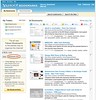
As mentioned above there are some (many) places that need help or some attention to detail in the new Bookmarks. I am using screen captures to help illustrate the points and the images are on Flickr and notations are there. Some of this seems snarky at times, but I am rather shocked that so many details and blatant errors made it public. I am a huge Yahoo fan, for a long list of reasons, but this does get me to question the attention to detail and care that goes into design and development. This was likely hundreds of hours of work by a team and a lot of testing. Just really surprised.
bookmarks_home_default_sort

When I first came to the new Bookmarks Home page I was surprised to see all of the content. My expectation was it was going to be my old bookmarks that were included in My Yahoo! pages, which I update and are extensions of bookmarks from 1999. There was no clue on the page that the content had come from MyWeb 2, it took some digging and the "imported delicious" in my tags was the clue. There is no explanation how the bookmarks would be integrated into My Yahoo (I don't want my 2,400 some MyWeb bookmarks in My Yahoo).

The interface on Bookmarks Beta, while nice is difficult to find the sorts and folder/tag view modification as the typeface is very small. The "Sort by:" does not state was the default sort is. The sort is a toggle between date and title (presumably title by alphabetical sort, but my assumptions seem to be off on many things on the site).

The tools bar with view selection, add, edit, move, send, and delete was a little confusing. Some of the tools relate to making a check box selection in the bookmarked items, but that is not clear. While, other tools are not related (view selector and add). I easily understood view, add, edit, and delete were. Move has an icon that indicates moving out of a folder, but I was not clear where a "move" would put the selected items. Was it going to a folder, into My Yahoo sidebar, into del.icio.us, etc. Where was it moving things to? Send had similar problems as one could send by e-mail (should it state e-mail instead?) Why not use the really helpful convention in Yahoo! Local, which is really clear as to where things can be sent? Lastly, I found out that deleting something from Bookmarks removes the item from MyWeb 2 and that should not happen, unless it is made clear in the page that your bookmarks are being pulled from that repository, which Bookmark Beta fails to do.

Edit Bookmarks Broken

edit_form

The Edit Form page was where I began to think that the Bookmark Beta was more an Alpha. I had first thought it was my using Firefox 2 as a browser, but the same if not worse problems also exist in my Safari browser. The edit bookmark screen is missing labels for the form fields, but it is also missing the existing content. It seems that this could be caused by relying on JavaScripting rather than a server generated page, as this page does not degrade well at all. Additionally the tag fields are empty, where the tag I want to edit should be. If the tag had been in the text box field I would have had a far more painful time separating the multi-term tag into its intended single term tags. Yahoo MyWeb 2 did this really well with a convention called commas. The social bookmarking site, Raw Sugar also uses this common convention and has wonderful affordance for assisting people with their comma separate string of tags. Having text box fields limits the ability for scaling, even if the interface populates the screen with a new text box when the five offered are filled it is still a really clumsy interaction it seems (I know Yahoo! test the living daylights out of their interfaces, which is a great thing, and I would love to know how this interface ended up in the public). Oddly, the one thing missing from this screen is the ability to add this bookmark into a folder. The new Bookmark tool is keeping the folders or is it not? Should not all of the possible interactions be available from the edit view?

Additionally, in a second view of the bookmark edit screen you will see the selected entry is not next to the bookmark edit screen. This likely means that the item being edited, if selected from the lower portion of the page, will not be anywhere near the editing box. There really must be closer. There is a lot of JavaScript being used on the page already, why not hide the items not selected for editing to provide a better proximity for people editing?

Bookmark Search Missing Items or Poor Sort
Y! Bookmark Beta Search Results

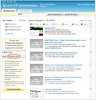
I tried "Search bookmarks" to get "tech" items. This search is supposed to query tags, titles, descriptions, etc. The resulting set was missing the first item from my default view, which is tagged "tech" is not in this set returned. This set is set for a sort order by date, which should put the item at the top of the returned set. This was something I really wanted to try in search as a similar returned set has been the result in MyWeb 2 and del.icio.us for at least a couple months. The algorithm is horribly off or the the sort is off. The good thing in the Bookmark Beta is it lets you know the sort order (the state in the default result is called out correctly),and lets you select a different sort order. Unfortunately, the search is broken as it is elsewhere. When I ran the search on tags (in the tag view portion of the page) the proper result set was returned with the most recently added item with a "tech" tag right at the top of the date order sort.

The labeling of the page and the type of search is missing from the page. The heading for the results states "Search Results 1-10 or 572", but it does not say what type of search I just ran. A proper heading should be should be "Search Your Bookmarks Results 1-10 of 572".

Add Bookmark Screen

Y! Bookmark Beta Add Bookmark Screen

This page has few oddities. The thing that stands out on this add bookmark page is the "My Tags" area. In the folder view of that content object you can drag-and-drop an item into a folder. The convention has been set that there is a drag-and-drop connection between that content object and my bookmarks. But in the tag view you can not drag one of the 20 tags into an empty (or filled) tag text field. The convention that was set, does not extend.

More troubling is the "My Tags" content object has find functionality stating "Type Tag here" in the text field next to the find button. When I have the add screen open I am not expecting that to take me to a new screen. Since the add tag interface does not have type ahead from by tag set, I would think had been hopeful that I could drop in a tag and have other related tags I have used on bookmarks would surface. What does get returned is a tag search result page and my add bookmark screen is blown away. I realize that the convention for what happens with tag search/find is already set, but since the convention for drag-and-drop is broken from folders, other things could be emergent as well.

All My Tags

Y! Bookmark Beta All My Tags

This page is held back by poor labeling with the "All Tags" label, but it is actually "All My Tags" or some similar convention, as they are not all the tags from all of the users. The tags are semantically well structured in the XHTML as they are an unordered list, which is easy to parse mechanically or for accessibility reasons. The layout of the tags would benefit from having the list be full justified, which would provide a little more space around the tags leading to easier scanning of the page full of tags.

It is odd that the page has a handful of weighted tags, the flat list of tags alphabetically is easier to scan than a weighted tag cloud but these five tags that are most often used seems to be rather odd. I am quite happy not to see a full tag cloud.

Recommended Bookmarks

Y! Bookmark Beta Recommended Bookmarks

The Recommended bookmarks tab is the old unuseful default page from MyWeb 2, also known as the Interesting Today page. Ironically, there has never been anything interesting on this MyWeb 2 page. Yahoo Bookmarks has a really good clue as to what I find interesting (or any other person using the tool) or pay attention to, it is our bookmarks. We make an explicit statement each time we bookmark something as to what we have an interest in. This can easily be paired to find people who have bookmarked the same items (this identifies people who may be good sources for new bookmarks to recommend) and what vocabulary they have used to call that bookmark something (if they use the same terms to describe the bookmark it can be easily and most often correctly deduced that we do really have similar interests) and we have a few similar matches like this that person, their terms, and bookmarks can be used to build a list of things I would be interested in. If you take that list and parse it against things I have already bookmarked you will have a killer list of things to recommend me that I will care about. This can be server intensive, but the matching and pairing does not need to be done on the production server for the bookmarks, it can be chugging away in the background and serving up recommendations. This flows directly out of the presentation I have given to Yahoo! Tech Dev and have had many long discussions about at Yahoo! Since this is part of a public presentation I give all of competitors to Yahoo! have the information and most are putting it to use in various ways.

Wrap-up

Some of this seems harsh, but it is a public release by Yahoo! with a Beta moniker thrown on to it. But, much of this information Yahoo! already has as they have asked for the feedback before and received it. Things just don't get fixed. Some of these things are minor, but others are not details, they are big glaring errors. Yahoo has some of the best brains, designers, and developers on the planet and they should be producing products, even with Beta moniker that are not this rough. This is much closer to a Google product that is launched and is really rough around the edges and will likely not get fixed. At least I know with Yahoo things normally get ironed out, or at least they did.

None-the-less this has promise and it should be more accessible to regular people than MyWeb 2, but it seems really silly to throw out MyWeb 2 as it does many things better than del.icio.us, but del.icio.us does many things insanely well. Seeing the two products mixed will be a really tough challenge as it could easily break the fan base in del.icio.us or make a social bookmarking site like MyWeb 2 less approachable by putting a more geek-centric del.icio.us interface on it.

[I have added a follow-up to this focusing on the Yahoo! Roadmap for Social Bookmarking.]



19 August 2006

kGTD is Getting Things Real

I/we got a love letter or what I did this summer letter from Ethan at Kinkless, you know the maker of the killer kGTD (for Getting Things Done fans on Mac) extension for OmniOutliner.

What I really enjoyed was the apology and lighthearted story. Yes, I am quite looking forward to the next iteration or two from kGTD. But, Ethan connected with his community to keep them close and let them know he still cares about them and even apologized for his absence and lack of communication. This was rare and well done. He just won the hearts of his fans (how have not had to pay for his great contribution to our digital lives).

One things to note (if you are not familiar with kGTD as you are not interested in Getting Things Done (I am not being snarky, just you are not part of the kult) or are on a platform other than Mac) is kGTD caused the software it extends to get redesigned/reengineered to better support the tool. The kGTD fans caused a spike in purchases of OmniOutliner that they embraced many of the fan requests for product improvement. In turn the OmniOutliner had performance increases and functionality improvements that made their over all product much better than it already was. It shows what a great extension or external product layered on top of another product that is open for modifying can do for the whole ecosystem. OmniOutliner had a avid fan base, but it grew even larger and more avid with this kGTD extension. All of the Omni products are great and have deep followings.

The human, "we are just like you", approach to connect with those that use and have interest in the product helps keep it real and friendly. We connect more closely with the developer and the person. It builds a better bond. I have been deeply impressed and interest rekindled.


4 August 2006

Do Not Break the Web

On the list of things you should never do is Do Not Break the Web particularly for important resources. No matter what problems exist in winding down a partnership, never, never mess with the public good that has been done. This may be one of the most damaging childish acts I have seen in a while.

One only hopes that the Slidell Hurricane Damage Blog can come back to life as it was a central resource used by people and proved blogs have a place. Who cares who built it. It has real value to real people.

This site was informative, provided a central point of communication, and built community. It was about those that used it not those who made it.


28 July 2006

Platial Turning it Up

A few months ago a couple of friends pointed me to Platial a social geo-annatation site that is build on top of the Google map API. As luck would have it I met up with the creators and developers of Platial while in Amsterdam at XTech 2006. I was in deep "just got off an overnight flight" syndrome, but really enjoyed talking with them non-the-less.

Platial is headquartered in Portland, Oregon and on my recent trip I stopped in to say hello. Not only do they have killer developers and staff, an incredible workspace, but great things are coming to Platial. I left even more impressed with the tool and the direction it is heading than I was prior.

If you have not tried it, head on over and give it a try. Remember to keep coming back as they have more killer stuff in the pipeline.


This work is licensed under the Creative Commons Attribution-NonCommercial-ShareAlike License.